
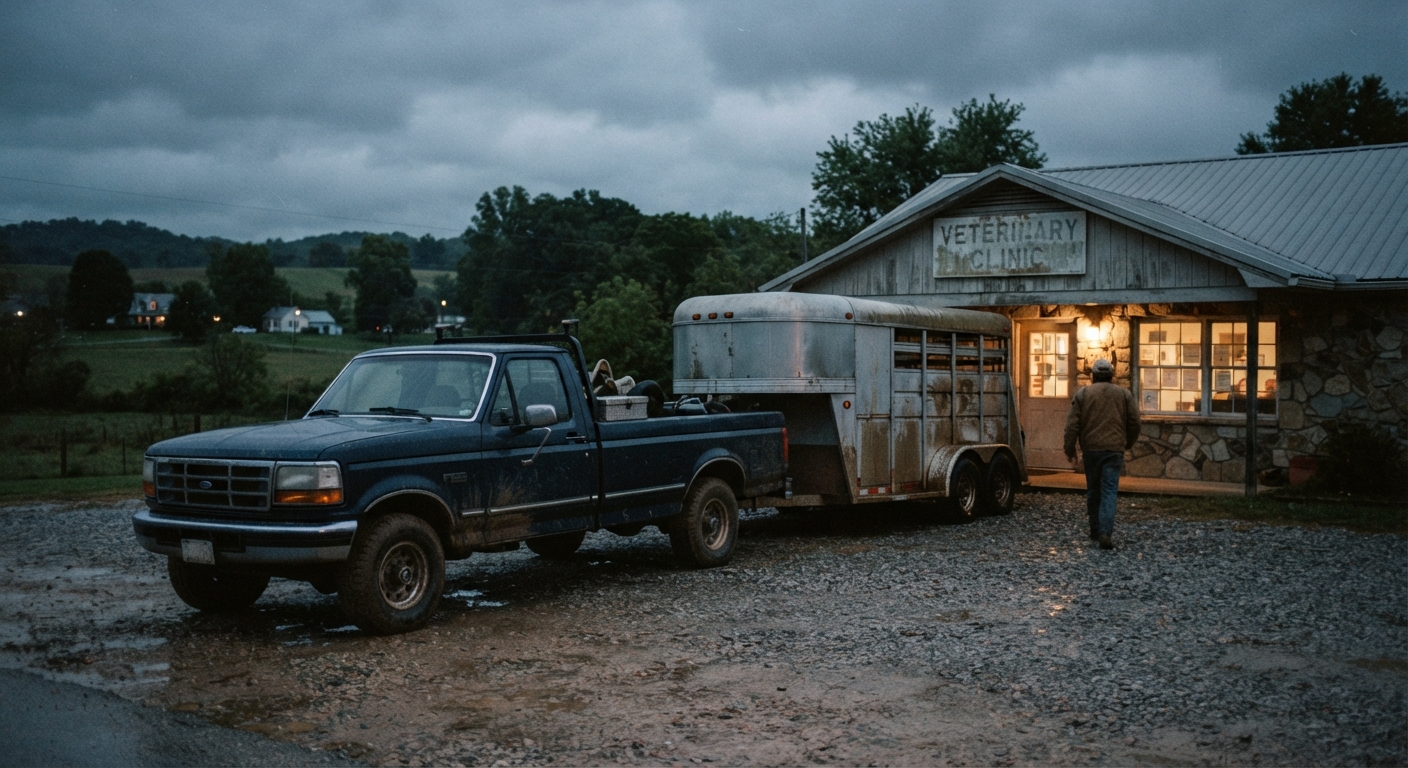
Why large-animal vet coverage has shrunk in many rural counties
If it feels like the vet is farther away than it used to be, you’re not imagining it. Large-animal practices have been closing or scaling back in a lot of counties, and the ones that remain often cover territory that would have been split between two or three clinics a generation ago. Vet school graduates increasingly choose small-animal or mixed practice in towns with more people and more predictable hours. Large-animal work means being on call nights, weekends, and holidays, driving long gravel roads in bad weather, and getting paid for a fraction of what a specialty small-animal clinic charges for the same amount of skill and risk.
The result is fewer large-animal vets covering wider areas, and some of those vets nearing retirement with no one lined up to take over the practice. In some counties, the closest vet who will come out for a down cow or a colicky horse is genuinely an hour or more away. That’s not a failure on your part for not finding someone closer. It’s a real gap in rural infrastructure, and it means the financial planning has to work around a longer drive and a smaller pool of providers, not against them.
The real cost breakdown: farm call fee, mileage, after-hours rates, and treatment
An emergency livestock vet bill isn’t one number, it’s several stacked on top of each other, and it helps to know the pieces before you’re staring at an invoice at midnight.
There’s usually a farm call or trip fee just for the vet to come out, separate from anything they do once they arrive. On top of that, many clinics charge mileage for the distance traveled, which adds up fast when the nearest large-animal vet is an hour each way. Then there’s the after-hours or emergency rate, which is often a flat surcharge or a multiplier on the standard rate for nights, weekends, and holidays. Only after all of that do you get to the actual treatment: sedation, suturing, a calving pull, IV fluids, medication, and possibly a follow-up visit or referral to a surgical facility.
Add it up and a single emergency call can run well beyond what a routine daytime visit would cost for the same animal. Knowing that structure ahead of time helps you ask better questions when you call, and it helps you plan a fund that’s sized for the real number, not just the part of the bill that’s easy to think about.
Building a dedicated emergency vet fund separate from general savings
General savings gets pulled in a dozen directions on a farm or ranch: equipment repairs, seed, feed, a bad month for the well pump. If your only emergency vet money is sitting in that same pool, there’s a good chance it’s already spoken for by the time an animal goes down.
A dedicated account, even a small one, changes how you make decisions in the moment. Some producers keep it as a separate savings account at their bank or credit union, funded a little at a time after each sale, calving season, or harvest check. Others keep a set amount in reserve tied specifically to livestock, separate from household or equipment funds, so it’s not competing with the tractor repair fund when a horse colics at 2 a.m.
The exact amount depends on what you run and how many animals you’d realistically call a vet out for in a bad year. A single cow-calf operation with a handful of head has different exposure than someone running a larger herd or boarding horses. The point isn’t to hit a specific number that works for everyone, it’s to have a fund that exists apart from everything else, so a 2 a.m. decision about whether to call the vet isn’t also a decision about whether you can afford groceries next week.
Questions to ask a vet clinic before you need them, not during a crisis
The middle of an emergency is the worst time to learn how a clinic handles payment, distance, or availability. A short call during business hours, before anything is wrong, can save you a lot of stress later.
Worth asking: What’s the farm call fee, and does it change based on distance or time of day? Is there a maximum radius they’ll travel for an emergency, and do they have an arrangement with another practice for calls outside that range? Do they require payment at the time of service, or can they set up a payment plan for larger bills? Will they give a rough estimate over the phone based on symptoms, even knowing it might change once they see the animal? Do they keep any record of your animals and property so they’re not starting from scratch when you call in a panic?
It’s also worth asking who covers for them when they’re off, on vacation, or simply booked with another emergency the same night. Having a second clinic’s number already saved, with these same questions already answered, means you’re not searching for a stranger to trust while an animal is suffering.
When a mobile vet or vet tech network can reduce trip costs
Some of the farm call and mileage cost can be softened depending on how the clinic structures its routes. A mobile vet who already schedules regular rounds through your area may be able to fold an urgent case into a nearby stop rather than making a dedicated trip, which sometimes affects the fee. It’s worth asking directly whether that’s how they operate and whether it changes pricing for you.
In some areas, a network of vet techs or experienced livestock handlers can also help bridge the gap, especially for stabilizing an animal or handling routine parts of a call under a vet’s phone guidance, while the vet is still on the road. This isn’t a substitute for a licensed vet’s judgment, but in a county where the nearest vet is an hour out, having someone who can start basic stabilization can matter. Ask your clinic whether they work with techs this way and what that arrangement costs compared to waiting for the vet alone.
Coordinating with neighbors on shared emergency transport for large animals
Getting a down or injured large animal to a clinic, when that’s the better option, often takes more than one person and more than a pickup truck. A stock trailer, a second set of hands, and someone who knows how to load an animal that’s in pain aren’t always available at 3 a.m. on your own place.
Some rural communities handle this informally, with a few neighbors who’ve agreed ahead of time to help each other haul in an emergency, trading favors over the years rather than money. Others have found it useful to have a simple shared understanding about which of a few trailers is available on short notice, and whose truck can actually pull it. None of this requires a formal agreement, just a conversation before you need it, so you’re not calling around at random when time matters most.
This kind of neighbor coordination doesn’t replace having your own financial cushion for vet costs, but it can reduce the total cost of an emergency by cutting down on wasted time, extra mileage, or the need to hire hauling help you wouldn’t otherwise need. In a lot of small towns, that kind of mutual arrangement has been part of how ranching works for longer than any clinic has existed nearby, and it’s still one of the most reliable tools available when the nearest vet is an hour away.
