
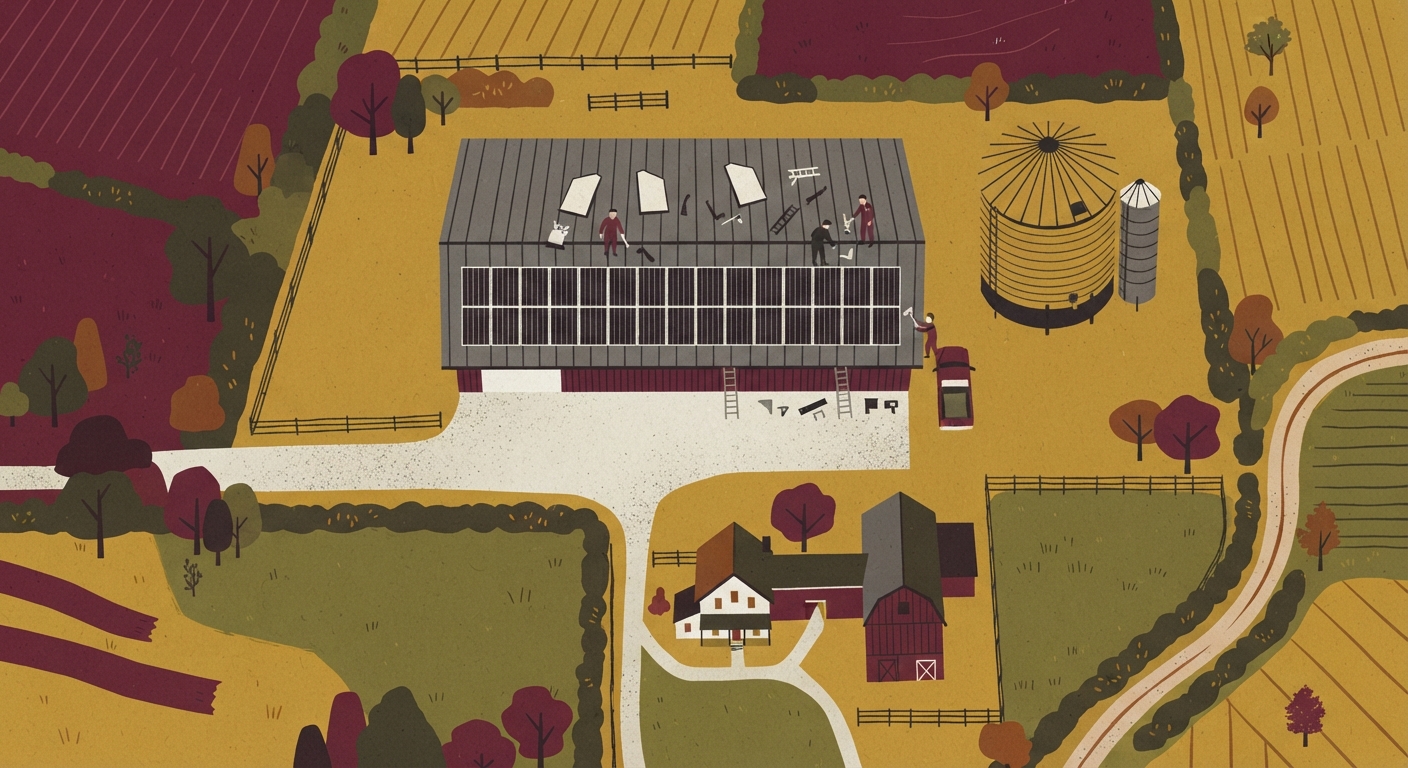
If you’ve dealt with USDA before, it was probably for a home loan through the 502 or 504 programs. REAP is a different animal entirely, even though it comes out of the same Rural Development office. The Rural Energy for America Program isn’t about putting a roof over your head — it’s about lowering the light bill, fuel bill, and irrigation pump bill for a farm or a rural small business. Where 502 and 504 loans help individuals and families buy or fix up a house, REAP is aimed squarely at agricultural producers and rural business owners who want to install renewable energy systems or make their operations more energy efficient. Think solar panels on a barn roof, a new efficient grain dryer, or upgraded insulation in a shop building. Same agency, same rural mission, completely different toolbox.
Who Actually Qualifies
REAP has two main groups of eligible applicants: agricultural producers and rural small businesses. If you’re a farmer or rancher, at least half your gross income needs to come from the ag operation. If you’re a small business, it has to be located in an eligible rural area — and USDA defines that as outside a city or town with a population over 50,000, though the exact map is worth checking on USDA’s eligibility tool rather than guessing based on your zip code. A lot of people assume their town is too big or too close to a metro area to qualify, and then find out the boundary lines are drawn differently than they expected. Business size matters too — REAP is meant for small businesses, not large operations, so there are size standards tied to your industry that a lender or the local office can walk you through.
What’s Actually Covered
The program splits into two buckets: renewable energy systems and energy efficiency improvements. On the renewable side, solar arrays are the most common project people bring in, but it also covers wind, small hydropower, geothermal, and even renewable biomass systems in some cases. On the efficiency side, the list is longer and more varied than people expect — upgrading a grain dryer to a more efficient model, replacing irrigation pumps and lining canals to cut water and energy loss, adding insulation to a shop or cold-storage building, swapping out old lighting for LED systems, and upgrading HVAC or refrigeration equipment in a rural store or restaurant. The common thread is that the upgrade has to reduce energy use or energy costs for an eligible ag operation or small business. It’s not for personal residences, and it’s not for equipment that doesn’t tie back to energy savings.
How the Grant-Plus-Loan Combo Works
This is the part that trips people up the most, so it’s worth slowing down on. REAP isn’t a straight handout — it’s usually a combination of a grant and a loan guarantee, and you can apply for one or both. The grant portion generally covers a percentage of total project cost, not the whole thing, and the loan guarantee portion works similarly to other USDA guarantee programs: USDA backs a loan made by a private lender, which makes that lender more willing to finance the rest of the project. Cost-share percentages have varied depending on funding cycles and project type, so rather than assume a fixed number, treat it as “USDA covers a meaningful chunk, but you or your lender need to have the rest lined up.” That means before you apply, you should have a realistic sense of what the total project will cost and where the remaining money is coming from — savings, a loan, or a combination. Applicants who show up with financing already thought through tend to move through the process faster than those who are hoping the grant alone will cover everything.
Paperwork Realities
Here’s where a lot of good projects stall out. REAP applications typically require some kind of energy assessment or audit, and for larger projects, a technical report prepared by a qualified professional — someone who can document the current energy use, the expected savings from the upgrade, and the technical specs of the system you want to install. This isn’t a form you fill out over coffee. It takes time to line up an auditor or engineer, get the numbers together, and make sure the application package matches what USDA is asking for that funding cycle. The most common reason applications get delayed isn’t that the project is a bad fit — it’s that the paperwork is incomplete, the technical report doesn’t match the required format, or the applicant didn’t realize how far in advance they needed to start the audit process. If you’re thinking about applying, start the energy audit conversation months before you think you need to, not weeks.
Working With Rural Development or an Experienced Lender
Your local USDA Rural Development office is the first call to make, and it’s worth an in-person visit if you can manage it rather than just a phone call. Staff there can tell you what’s currently being funded, what the application windows look like, and whether your project idea fits neatly into the program or needs to be reshaped. If you’re pursuing the loan guarantee side, finding a lender who has actually closed a REAP loan before matters more than picking your usual bank by default. A lender who’s done this before knows how the guarantee paperwork flows, what USDA underwriters tend to flag, and how to package your application so it doesn’t bounce back with questions. Ask directly: “Have you closed a REAP-guaranteed loan before?” It’s a fair question, and the answer will save you time either way.
Why Applications Get Rejected — and How to Come Back Stronger
Rejections usually come down to a handful of repeat issues: incomplete technical reports, projects that don’t clearly demonstrate the energy savings they claim, applicants who don’t quite meet the rural or income eligibility rules, or funding cycles where demand simply outpaced available dollars that round. The good news is that REAP is a recurring program, not a one-shot deal. If you get turned down, ask specifically what the reviewers flagged — sometimes it’s a fixable paperwork gap, not a fundamental problem with the project. Tightening up the technical report, getting a clearer cost breakdown, or reapplying in a different funding cycle with a stronger application has worked for plenty of rural applicants who didn’t get it right the first time.
Comparing the Payback Timeline to On-Bill Financing
Some rural electric co-ops and utilities offer on-bill financing for efficiency upgrades, where the cost gets tacked onto your monthly utility bill and paid off over time. It’s simpler paperwork, no doubt, and worth considering for smaller projects. But REAP’s combination of grant money plus a guaranteed loan often means a shorter real payback period for bigger investments like a full solar array or a major equipment upgrade, because a chunk of the cost is covered outright rather than financed at all. On-bill financing tends to make more sense for smaller, quicker upgrades where the application hassle of REAP isn’t worth it. For larger capital projects, the extra paperwork on the front end of REAP is usually worth the payoff in reduced long-term cost — but it’s a decision that depends on your project size, your timeline, and how much staff time you have to put into the application. There’s no universal right answer, just a trade-off between upfront effort and long-term savings that’s worth weighing honestly before you commit to either path.
