
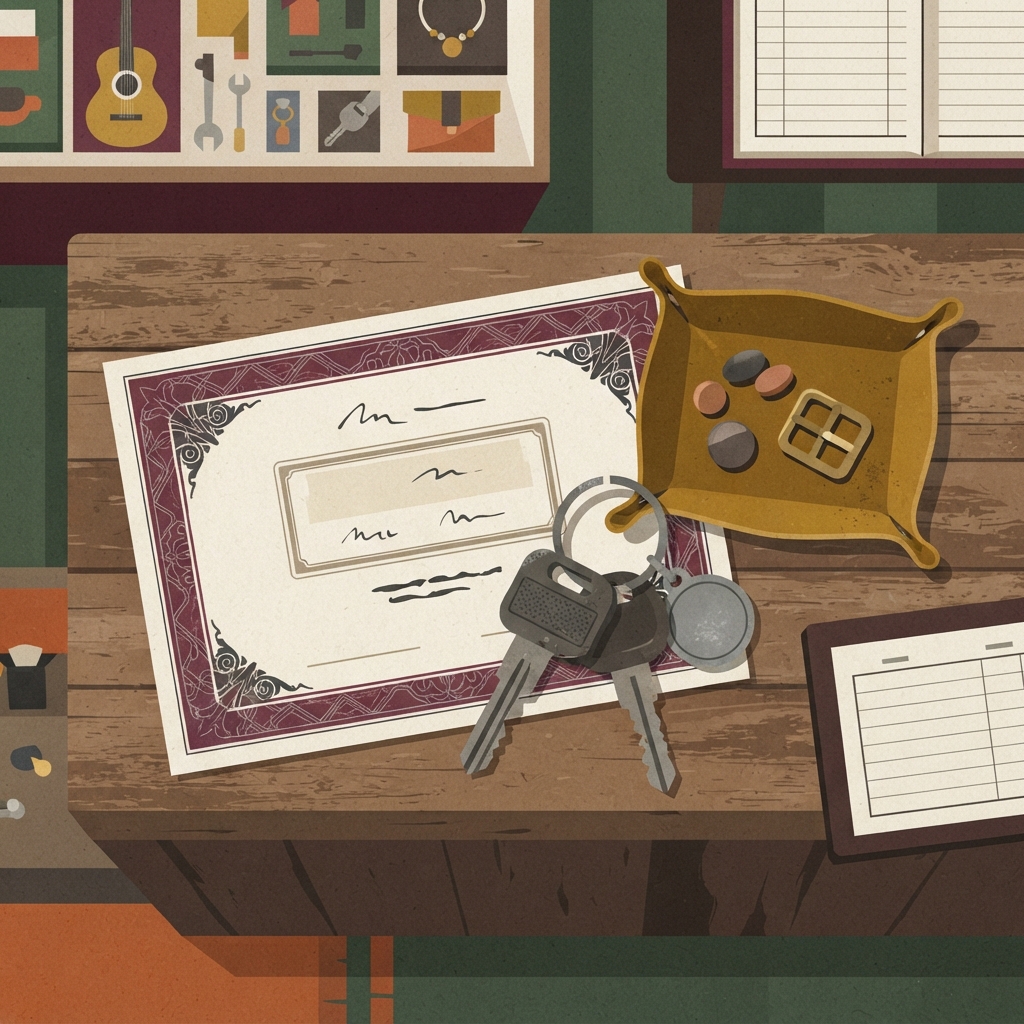
Twenty miles to the nearest branch. Another fifteen if the road’s washed out or the truck’s already low on fuel. When something breaks a week before payday – a well pump, a transmission, a vet bill for a calving cow that went sideways – the calculus in a small town looks nothing like the calculus in a city where three banks sit within walking distance of each other. Out here, the title loan place off the highway or the pawn shop next to the feed store is often the only lender with the lights on. That doesn’t mean it’s a good deal. It means you need to know exactly what you’re paying for that open door before you walk through it.
Why rural borrowers turn to title loans and pawn shops more often than city borrowers do
It’s not that rural folks are worse at managing money. It’s that the options are thinner. Bank branch closures have hit small counties harder than metro areas for years now, and when the closest credit union is an hour’s drive during a workday, that trip costs gas money and lost wages on top of whatever you’re borrowing for. Title loan shops and pawn shops, by contrast, tend to cluster along the same rural highways as the gas stations and dollar stores – open evenings, open weekends, no appointment needed, no credit check, cash in your hand in twenty minutes.
That speed and access is real value, especially when you’re staring down a shutoff notice or a truck that needs to run tomorrow for the job that pays the bills. The problem isn’t that these places exist. It’s that plenty of borrowers walk in without a clear read on what the loan will actually cost by the time it’s paid off, and by then the truck or the tools are already on the line.
How title loan APRs and pawn shop fees stack up against a credit union small-dollar loan
Title loans are typically short-term loans secured by your vehicle’s title, and the fees are usually charged monthly rather than as a simple annual rate – which makes them look smaller than they are until you do the math. A monthly fee that sounds modest can translate into a triple-digit annual percentage rate once you account for how these loans compound if you roll them over, which many borrowers end up doing because the full balance is due so soon.
Pawn shop loans work differently – you hand over an item, get a percentage of its resale value in cash, and pay a monthly fee to redeem it. If you don’t pay, you don’t owe anything further; the shop just keeps and sells your item. That “no debt collector” feature makes pawn loans less dangerous in one sense, but the fees, expressed as an annual rate, often land in the same steep territory as title loans.
Compare that to a small-dollar loan through a credit union, which is capped at a fraction of what most title loans charge, with fixed terms and no vehicle at risk. The catch is you generally need to already be a member, and some credit unions require a short waiting period after you join before you’re eligible to borrow. That’s a real barrier when you need cash today – but it’s also a strong argument for joining a credit union now, while things are calm, so the option exists the next time they aren’t.
The repossession and redemption risks specific to farm trucks, trailers, and work equipment
In the city, losing a car to repossession is bad. Out here, losing the truck can mean losing the ability to get to work, haul stock, plow a driveway, or get a kid to school when the bus route doesn’t reach your road. Title lenders can often repossess the vehicle after just one or two missed payments, and because the loan term is so short to begin with, it doesn’t take long to fall behind.
Farm equipment and trailers used as collateral raise their own headaches. A title lender or pawn shop may not fully understand the resale market for a stock trailer or a used baler, which means the valuation you’re offered – and the value they expect to recover if they repossess – can be wildly out of step with what that equipment is actually worth to your operation. Losing a truck is inconvenient. Losing the only trailer that fits your gooseneck hitch during calving season, or a pickup with a plow mount right before the first snow, can cost you far more than the loan ever did.
Red flags in title loan contracts that matter more when the lender’s office is two counties away
Read the contract before you sign, not after. A few things to check specifically:
Where does the contract say disputes get handled, and where is that location relative to your house? If the lender’s office – or the arbitration location named in fine print – is two counties over, showing up to contest a repossession or a fee dispute becomes its own logistical and financial burden.
How is the payoff calculated if you pay early, and how does a rollover or “renewal” actually work? Some contracts structure renewals so that you pay another round of fees without touching the principal at all, meaning you can pay for months and still owe the full original amount.
Does the contract require a working GPS device or starter interrupt on the vehicle? Some title lenders install this equipment, and in areas with spotty cell coverage, that device can behave unpredictably – shutting a vehicle down at the wrong moment isn’t a minor inconvenience when the nearest tow service is also an hour away.
What does the contract say about partial payments and grace periods? Ask this out loud to the person behind the counter, and get the answer in writing if you can. A verbal promise of flexibility means nothing if the paperwork says otherwise.
Lower-cost alternatives: credit union payday alternative loans (PALs), CDFI emergency loans, and church or extension office assistance funds
Before signing over a title or handing over a chainsaw, it’s worth checking a few doors that are less visible from the highway but often cheaper by a wide margin.
Many credit unions offer what’s called a payday alternative loan, a small, short-term loan designed specifically to compete with payday and title lenders, with a much lower rate cap and a repayment schedule that’s actually built to be paid off rather than rolled over. If you’re already a member, this should be your first stop. If you’re not a member, ask about eligibility – many credit unions serving rural areas have looser membership requirements than people assume, sometimes based simply on the county you live in.
Community development financial institutions, often called CDFIs, exist specifically to serve communities that mainstream banks have pulled back from, including a lot of rural and small-town America. Some offer emergency loans or lines of credit at far better terms than a title shop, though approval can take a few days rather than a few minutes.
Don’t overlook local institutions that aren’t lenders at all in the traditional sense. Churches, county extension offices, and farm bureau chapters in many areas keep small emergency assistance funds or know which local programs do, particularly for things like utility bills, vehicle repairs tied to farm work, or livestock-related emergencies. A phone call costs nothing, and it’s often the fastest way to find help that doesn’t come with a fee schedule attached.
A decision checklist for weighing a pawn or title loan against waiting for the next paycheck
Before you commit, walk through this:
Can the bill wait even three or four days? A short delay, a payment plan with the utility company, or a call asking for an extension is free. A title loan fee is not.
What happens to your ability to work or get to work if this item or vehicle is gone for good? If the answer is “I lose my income,” treat that collateral as far more valuable than its resale price.
Have you called your credit union, a local CDFI, or your church or extension office first? Even one call, made before you drive to the title loan lot, might save you real money.
If you do go forward, can you realistically pay it off in one term, without a rollover? If the honest answer is no, the loan is likely to cost you multiples of what you’re borrowing – and that’s worth knowing before you sign, not after the tow truck shows up.
