
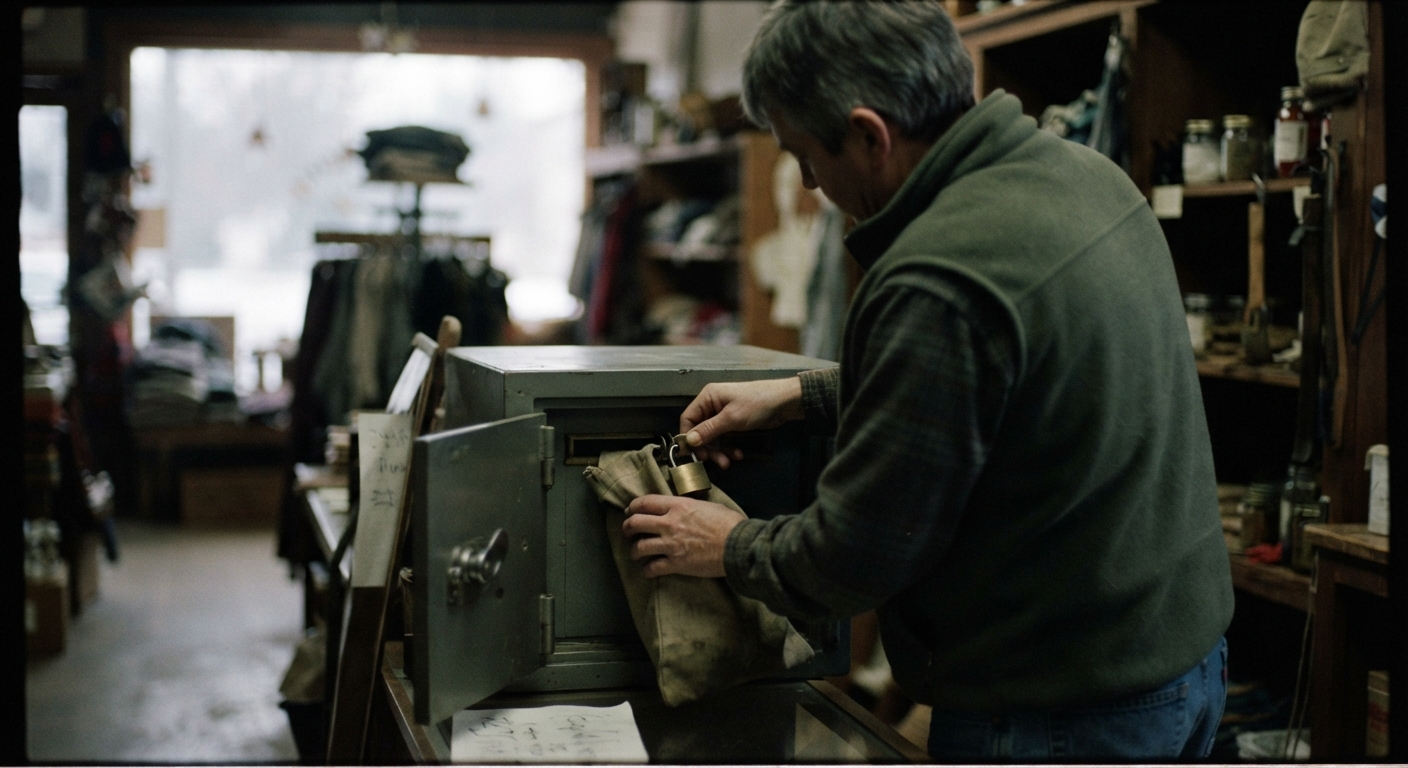
The diner off the county highway closes at 8, but the bank branch fifteen miles away locked its doors at 4:30 and stopped answering the drive-through intercom sometime around 2018. This is the math a lot of small-town business owners live with every single day: hours of cash coming in, and no easy, safe way to turn that cash into something other than a stack of bills sitting in a drawer overnight.
Why more rural businesses run cash-heavy and what that means for daily security
Rural economies still run on cash more than city folks might assume. Feed stores selling to farmers who’d rather not put fuel and supplements on a card. Farmers market vendors with a cash box and a card reader that only works when the cell signal cooperates. Diners, bait shops, auction houses, and small contractors who get paid on delivery, often in bills folded into an envelope. Add to that an older customer base that never fully switched to digital payments, and you get businesses holding real money at the end of the day with fewer places to put it.
That cash sitting on premises overnight is exposure, plain and simple. It’s a target for break-ins, it’s a temptation for internal theft when nobody’s watching the till, and it’s money that isn’t earning anything or even being tracked by the bank until someone physically drives it there. In a town with a bank branch on Main Street, this used to be a non-issue. You closed up, dropped the bag in the night depository, and drove home. In a lot of rural counties now, that branch is gone, consolidated into a regional hub twenty or thirty minutes away, and the “just drop it off” plan doesn’t work anymore.
Night deposit boxes: how they work, what banks charge, and where they’re disappearing
For the businesses that still have access to one, a night deposit box is about as simple as banking gets. You get a zippered bag or a locking pouch from the bank, you fill out a deposit slip, seal it up, and drop it through a slot in the building’s exterior wall or a stand-alone kiosk after hours. The bank’s staff opens it the next business morning, verifies the contents against your slip, and credits your account. Most banks that still offer this charge a modest monthly fee for the bag and slot access, sometimes bundled into a business checking package, sometimes billed separately.
The catch in farm country is that the night drop is only useful if there’s a branch nearby to drop it at. As banks consolidate branches and pull back from small towns, night deposit boxes go with them. A business that used to drive ten minutes to make a night drop may now be looking at forty-five minutes each way, which turns a two-minute errand into an hour-long round trip, every single night the business is open. Some owners just stop doing it daily and start holding several days’ worth of cash, which multiplies the risk instead of reducing it.
Alternatives when there’s no night drop: bonded courier pickups, timed-access safes, and dual-employee protocols
When the night drop isn’t a realistic option anymore, most rural businesses land on some combination of three tools.
Bonded cash courier services are built for exactly this gap. A licensed, insured courier comes to the business on a set schedule, picks up the sealed deposit, and transports it directly to the bank or to a cash processing center, sometimes counting and verifying it before it ever reaches a teller. This costs more than a free night drop ever did, but for a business bringing in real cash volume, the cost is often smaller than the risk of an owner or employee driving cash themselves after dark or a break-in eating a week’s receipts. Courier contracts usually specify pickup windows, minimum and maximum amounts covered per pickup, and what happens if a scheduled pickup is missed, so it’s worth reading that fine print before signing.
Timed-access safes, sometimes called smart safes, are the other big piece of this puzzle. These are safes that accept cash deposits through a slot around the clock, count and record what’s put in, and only release funds on a schedule or with dual authorization, sometimes tied directly to a courier pickup or even providing provisional credit to the business’s account before the cash physically reaches the bank. For a diner or feed store that can’t wait around for a courier every single night, a decent timed-access safe means the day’s cash goes somewhere lockable and logged the moment the register closes, rather than sitting in a cash drawer or a backpack in someone’s truck.
Even without fancy equipment, a dual-employee protocol goes a long way. That means two people, not one, are involved in counting the till, sealing the deposit bag, and locking it away, with both signing off on the total. It’s not glamorous, but it closes off a lot of the “money went missing and nobody knows how” situations that plague cash businesses, and it protects an honest employee from being wrongly suspected too.
Insurance considerations for cash on premises and cash in transit
A lot of owners assume their general business insurance covers cash losses the same way it covers a broken window or a stolen laptop. It usually doesn’t, not fully. Cash sitting in the register or a safe overnight typically needs its own coverage, often with a cap on how much is protected unless you’ve specifically increased that limit, and insurers may ask about the type of safe or lockbox you’re using before they’ll extend meaningful coverage.
Cash in transit is its own category too. If an employee is the one physically driving the deposit to the bank, that trip may not be covered the same way a bonded courier’s trip is, since courier services typically carry their own transit insurance as part of what you’re paying for. It’s worth an actual conversation with your insurance agent, not an assumption, about exactly what dollar amount is covered on-site overnight, what’s covered in transit, and whether your coverage changes based on which security measures, safe types, or courier arrangements you have in place. A crop insurance agent who also handles farm liability may not automatically flag these gaps unless you ask directly.
A simple end-of-day checklist for owners managing deposits without a nearby branch
For businesses working without a convenient night drop, a consistent closing routine matters more than any single piece of equipment. A workable checklist looks something like this: count the till with two people present whenever staffing allows, record the total on a log sheet that both people sign, seal the cash in a tamper-evident bag rather than a plain envelope, place it in a locked safe bolted to the floor or wall rather than a drawer, and note the time it went into the safe. If a courier service is used, confirm the next scheduled pickup date and keep the receipt or manifest they leave behind. If no courier is coming for a day or two, know exactly how much cash is accumulating and whether that total is still within what your insurance actually covers.
None of this eliminates the extra thirty minutes of driving that a lot of rural business owners have simply absorbed since their local branch closed. But it does mean that when something goes wrong, whether it’s a break-in, a mix-up, or a bank dispute over a deposit total, there’s a clear record showing exactly what happened and when, which is often the difference between a quick resolution and a long, frustrating argument with an insurance adjuster or a bank forty minutes away.
