
Why rural outages run longer than metro outages
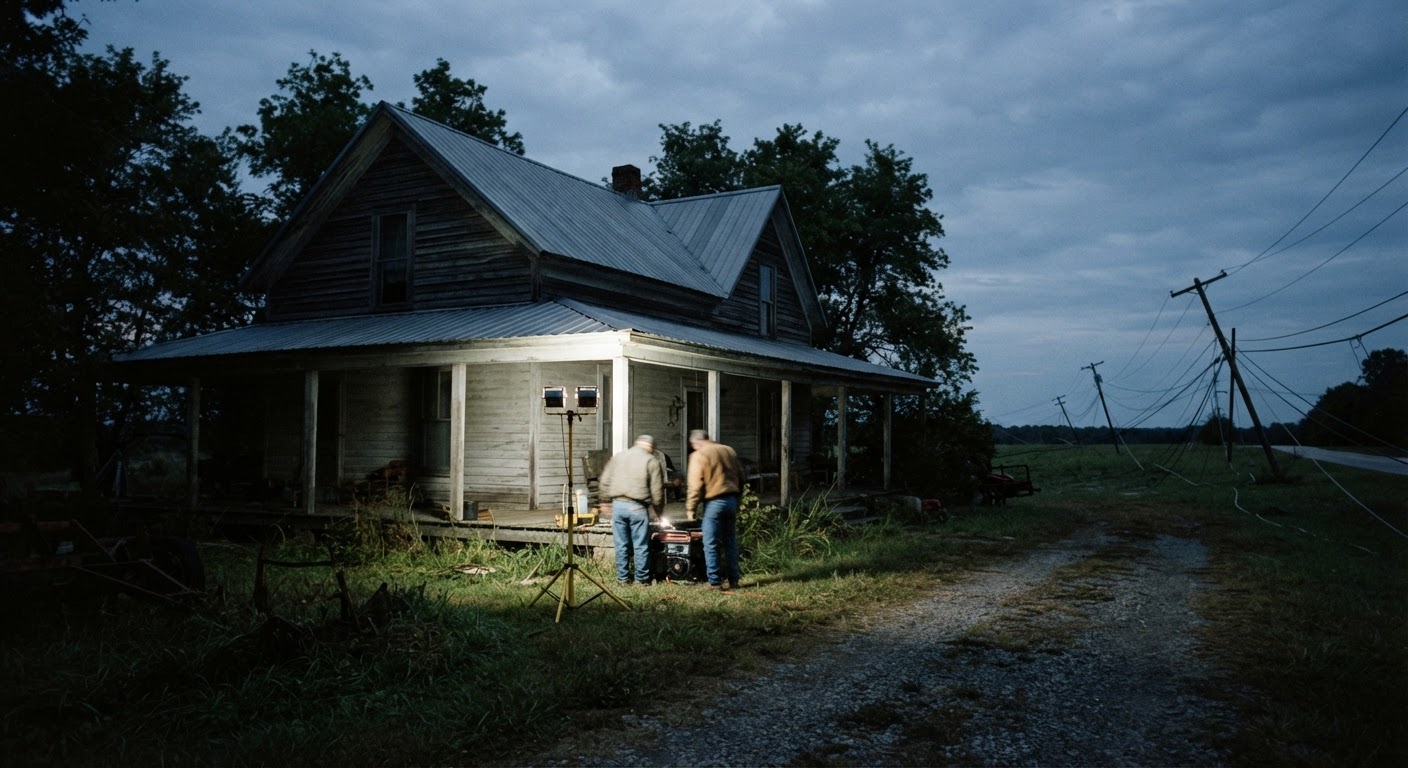
When a storm knocks out power in town, crews usually have it back on within hours because the lines are short, the poles are close together, and there aren’t many miles to cover. Out here, it’s a different math problem. A downed line on a county road might be twenty miles from the nearest crew, on a spur that serves eleven households instead of eleven hundred. Utilities triage by how many customers they can restore per hour of work, and a rural feeder line just doesn’t score high on that list. That’s not an excuse, it’s just how the repair queue works, and it means you should plan for outages measured in days, not hours.
That stretch of time changes what actually breaks. A city apartment loses the fridge and the Wi-Fi. A farm or ranch loses a lot more at once: the chest freezer full of a season’s worth of processed meat, the well pump that feeds both the house and the stock tanks, heat tape on pipes that run under an uninsulated crawlspace, and automated waterers that keep livestock from going thirsty in the cold. When the pump stops, the water stops, for animals and people both. When the freezer sits dark for four or five days, you’re not looking at a few spoiled leftovers — you could be looking at hundreds of dollars of meat and a lot of ruined work. Plan around the outage that lasts a week, because sooner or later one will.
What standard homeowners and farm policies actually cover
This is where a lot of people get an unpleasant surprise, usually right after the damage is done. Standard homeowners policies typically do not cover food spoilage from a power outage unless the outage was caused by damage to your own property — say, a tree fell on your service line and knocked out power to your house specifically. If the outage is due to a wider grid failure, storm damage to the utility’s lines, or a regional event, most standard policies exclude spoilage losses entirely. Some insurers offer a spoilage endorsement or it’s bundled into certain farm and ranch policies, but you have to ask; it’s rarely automatic.
Frozen and burst pipes are usually covered under standard homeowners policies as a “sudden and accidental” water damage event, but there’s a catch that trips up a lot of rural policyholders: insurers often require that you’ve taken reasonable steps to maintain heat in the home, or that the property wasn’t vacant beyond a certain number of days. If you were away when the power went out and pipes froze in an unheated house, some carriers will deny or reduce the claim. Read your policy’s vacancy clause and maintenance requirements before you need them, not after.
Farm policies are more likely to address livestock losses and equipment breakdown, but coverage varies a lot by carrier and endorsement. Death of livestock due to lack of water from a failed well pump might be covered under a mortality endorsement, or it might not be covered at all if the policy treats it as a management failure rather than a covered peril. Call your agent, not to file a claim, but to ask “what exactly happens if the power’s out for a week and my pump dies” before it happens. Get the answer in writing if you can.
Building a practical outage emergency fund
Most financial advice tells you to build a general emergency fund for job loss or medical bills, and that’s fine, but it’s not built for what a week-long outage actually costs. Outage costs are their own category: fuel for a generator running around the clock, ice and coolers if the freezer can’t be saved, a hotel room or gas to get to a relative’s house if pipes burst and the house is unlivable, and replacement of spoiled food and feed. These costs hit fast and in cash, often before insurance pays anything, if it pays at all.
A separate outage fund, even a modest one, keeps you from having to raid savings meant for something else or put emergency costs on a card at a bad rate. A reasonable target is enough to cover several days of generator fuel, a few nights away from home if needed, and replacement of a freezer’s worth of food. Keep it somewhere you can get to quickly — a local credit union account you can access without waiting on a transfer, not something tied up for days. If your bank branch itself is an hour away, factor that into how you keep this money accessible; a debit card and a nearby ATM matter more out here than they might in town.
Generator coverage gaps you need to know about
A generator can save your freezer, your well pump, and your pipes, but the generator itself creates its own insurance questions. Portable generators are sometimes covered under personal property if damaged in a covered event, but damage the generator causes — a fire from improper fueling, carbon monoxide issues, or backfeed into the grid — can fall into excluded territory fast, especially if the installation wasn’t done to code.
Standby generators wired into the house are a bigger commitment and usually need to be disclosed to your insurer, sometimes with proof of a permitted, inspected installation. If a standby unit was installed without the required electrical permit or without a transfer switch that meets code, some insurers will deny claims related to damage it causes, arguing the installation itself was the problem. Before you invest in a standby system, ask your insurer directly what documentation they’ll want on file, and keep a copy of the permit, the inspection sign-off, and the installer’s invoice somewhere you can find it, not just somewhere in a drawer at the house that might not have power to find it in.
A pre-outage checklist
A little prep before the storm saves a lot of arguing with an adjuster after it.
For the well pump: know whether your generator can actually run it, and test that combination before you need it, not during a blackout. For freezers and refrigerators: keep them as full as possible, since a full freezer holds cold longer, and keep a thermometer inside so you can document temperatures if you end up filing a spoilage claim. For livestock waterers: have a backup plan that doesn’t depend on electricity, such as a generator-fed heater or a manual watering route you can walk if the power and the pump are both down. For medical equipment that depends on power — oxygen concentrators, refrigerated medication, mobility equipment — talk to your utility ahead of time about priority restoration status for medical needs, and have a battery backup or a plan to get to a place with power if a device is life-sustaining.
Write all of this down in one place, with phone numbers for your insurance agent, your utility’s outage line, and whoever can help move livestock or hook up a generator if you can’t do it alone.
Documenting losses when the adjuster can’t get there for days
Rural claims often sit longer before an adjuster physically shows up, simply because they’re covering more ground with fewer people. That means your own documentation carries more weight than it would in town, where an adjuster might be at your door the next morning.
Photograph and timestamp everything as it happens, not after the fact: the freezer thermometer reading, the spoiled food before you throw it out, the burst pipe, the dead livestock if that’s part of your loss, the generator running or not running. Keep receipts for everything you buy in response — ice, fuel, hotel stays, replacement food — even if you’re not sure yet whether it’ll be reimbursed. Note dates and times of the outage itself, since utilities can sometimes confirm outage windows for your area if your insurer asks for it. A phone with a dead battery doesn’t take photos, so keep a small backup battery or a car charger specifically for this purpose. The goal is to hand the adjuster, whenever they arrive, a claim that’s already built instead of one they have to reconstruct from your memory a week later.
