
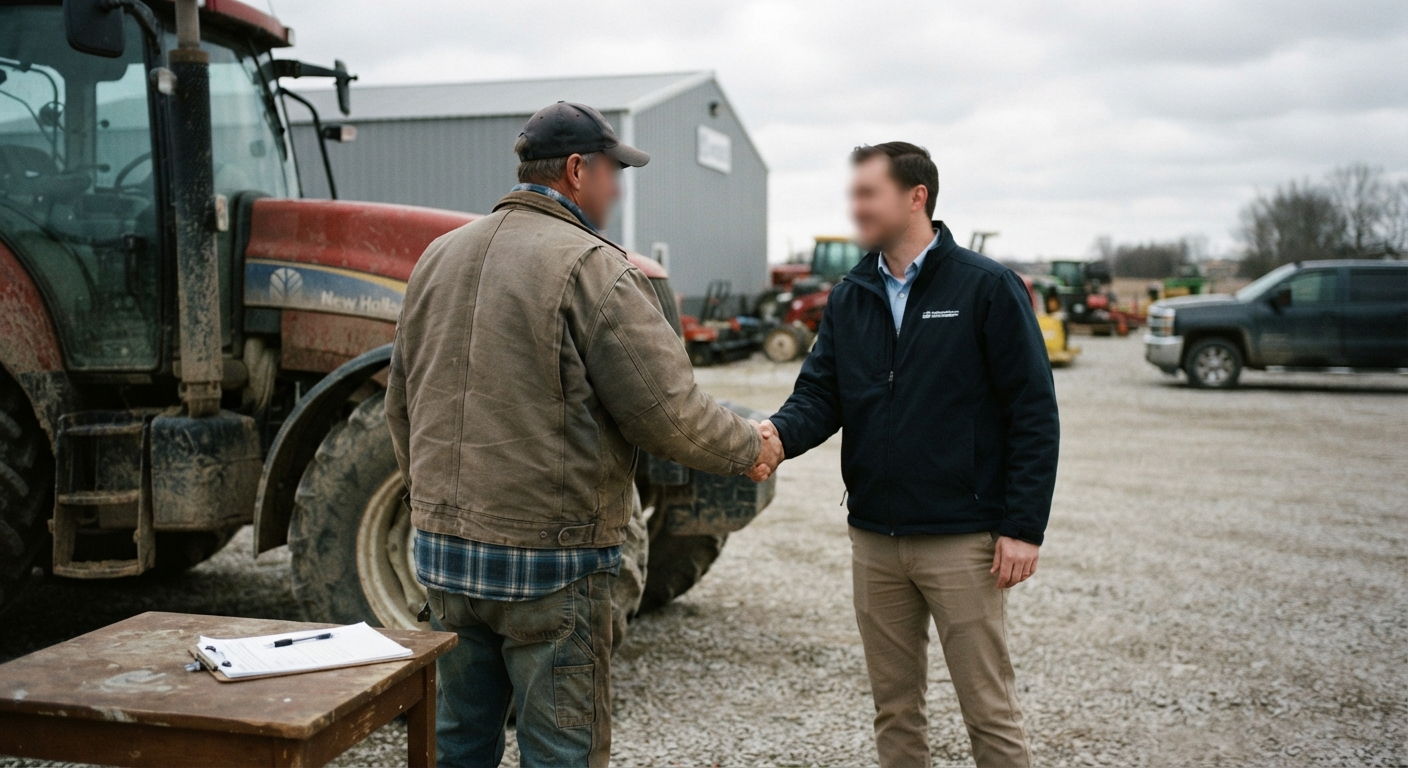
You’re sitting in the dealership’s back office at nine at night, tired, and the finance guy slides over a stack of paper for the loan on that used F-250 or the tractor you’ve been eyeing since spring planting. He tells you the rate, you sign, and you drive home. What you may not realize is that the loan you just signed probably isn’t a “dealer loan” at all. It’s likely a credit union loan, funded by an institution you may have never set foot in, arranged through something called indirect lending.
Here’s the section you asked for, followed by the rest.
What indirect lending means and why dealers use it in areas without many bank branches
Indirect lending is exactly what it sounds like: instead of you walking into a credit union and applying for a loan yourself (that’s “direct” lending), the dealer handles the application on your behalf and sends it to one or more lenders they’ve partnered with. The credit union reviews it, approves or counters it, and funds the loan. The dealer’s finance office is basically a middleman with a fax machine and a rate sheet.
This setup matters more in rural counties than it does in a city with a bank on every corner. If the nearest credit union branch is forty-five minutes away and closes at four, most people aren’t driving there twice to get pre-approved and then again to pick up a truck. Dealers know this, so they build relationships with credit unions and banks that are willing to lend on equipment and vehicles sold in their lot, and those lenders trust the dealer to send them decent paper. It’s a convenience trade: you get financing without an extra trip, the dealer moves inventory faster, and the credit union picks up loan volume it might not get any other way in a low-population area.
None of that is inherently bad. A lot of rural credit unions built solid indirect lending programs specifically because they know their members can’t always get to a branch, especially during calving season, harvest, or when the roads are bad. But convenience has a cost built into it, and it’s worth understanding where.
How credit unions set dealer agreements and rate sheets for rural equipment and auto loans
When a credit union agrees to work with a dealer, they set up what’s called a dealer agreement. Part of that agreement is a rate sheet, sometimes called a buy rate sheet. It lists the actual rate the credit union will accept for a loan based on your credit profile, the age and type of collateral (a two-year-old pickup underwrites differently than a fifteen-year-old grain trailer), and the loan term.
That buy rate is the credit union’s real cost of money for your loan, given your situation. It is not necessarily the rate you get quoted at the counter. Dealers are usually allowed to add a markup on top of the buy rate, within limits set by the credit union, and keep the difference. That markup is called dealer reserve or dealer participation, and it’s the next thing you need to understand.
For equipment loans specifically, rural credit unions often have separate rate sheets for ag equipment versus consumer autos, because the collateral risk and resale market are different. A used baler doesn’t depreciate or resell the way a used sedan does, and a good indirect lending program accounts for that. If you’re financing equipment through a dealer, ask which category your loan falls under, because ag-specific programs sometimes carry better terms than a generic installment loan shoehorned onto a piece of machinery.
Spotting markup: how dealer reserve can raise your rate above what the credit union offered
Dealer reserve isn’t a secret exactly, but it isn’t advertised either. Here’s the mechanic of it: say the credit union’s buy rate for your credit profile is 6.5 percent. The dealer agreement might allow the dealer to mark that up by a couple of points, so you get quoted 8.5 percent. The credit union still gets its 6.5, the dealer pockets the spread over the life of the loan, and you never see the original number unless you ask.
This is legal, and it’s how a lot of dealer financing income works, whether you’re at a car lot or an equipment dealer. It’s also exactly why the rate you’re quoted at the counter is a starting point, not a fact carved in stone. A few signs the rate you’re seeing has some room in it: the finance person is vague about your actual credit tier, they push back hard when you ask what the “buy rate” or “base rate” would be, or the rate seems high relative to what you’ve seen advertised by area credit unions for similar credit.
You’re allowed to ask directly: “What’s the rate before dealer markup?” Some finance staff will tell you outright. Others will dodge. Either way, asking signals that you know there’s a spread to negotiate, and dealers are often willing to shave some of that markup off rather than lose the sale, especially on higher-dollar equipment where the spread is meaningful in real dollars.
When it’s worth going straight to the credit union instead of signing at the counter
Indirect lending makes the most sense when you need financing fast, your credit is straightforward, and the difference between the dealer’s marked-up rate and a direct rate is small enough that the drive isn’t worth it. If you’re buying a decent truck with clean credit and the numbers are close, signing at the dealership on a Saturday afternoon might genuinely be the better use of your time.
The math changes when the loan is large, the term is long, or your credit situation is anything but simple. A tractor or combine loan can run into six figures and stretch five to seven years. On that kind of balance, even a percentage point of markup adds up to real money over the life of the loan. If you’re self-employed, have seasonal income, or you’ve had credit dings from a bad crop year or a slow stretch in your trade, a credit union loan officer who can actually talk through your situation face to face is going to serve you better than a finance desk trying to move a sale before closing time.
It’s also worth going direct if you already have a relationship with a local credit union, meaning you bank there, you’ve had a loan with them before, or you’re a member of an ag lending program they run. Existing members often get better underwriting consideration than a cold application coming through a dealer’s system, because the credit union already knows your payment history and your standing.
Questions to ask before signing an indirect loan on a tractor, truck, or trailer
Before you sign anything at the counter, a short list of questions can save you money and headaches down the road. Ask which credit union or lender is actually funding the loan, not just financing it, since dealers sometimes work with several. Ask what the buy rate is versus the rate you’re being quoted. Ask whether there’s a prepayment penalty, which matters if you plan to pay the loan off early from a good harvest or a big job. Ask whether the loan reports to your credit under your name directly or whether there’s any quirk in how it’s serviced, since some indirect loans get sold or transferred to a servicer after closing.
Also ask about gap insurance and any add-on products offered in the same conversation. These aren’t part of the loan itself, but they get bundled into the same paperwork and the same monthly payment, and it’s easy to sign for coverage you didn’t need or didn’t fully understand because it was presented in the same breath as the loan terms.
Refinancing an indirect loan later once you’ve established a direct relationship
If you signed an indirect loan and later realize the rate had dealer markup baked in, you’re not stuck with it forever. Once you’ve made a handful of on-time payments, many credit unions will refinance an existing auto or equipment loan, sometimes their own indirect paper, into a direct loan at their standard rate. This is worth doing once you’ve built enough of a track record that you’re not walking in as a stranger.
Refinancing makes the most sense when rates have moved, your credit has improved, or you simply want to consolidate your borrowing with one local institution you can call directly instead of dealing with a dealer’s finance department for every question. It’s a straightforward conversation to have with a loan officer: bring your current loan statement, ask what they can offer to refinance it, and compare that to what you’re paying now. For a big-ticket loan on equipment you plan to keep for years, even a modest rate improvement is worth the paperwork.
