
How USDA Defines “Rural” (and Why the Map Keeps Moving)
The USDA’s rural development loan programs, including the guaranteed and direct single-family housing loans, don’t use a fixed list of towns that qualify. Instead, eligibility is tied to population thresholds and other characteristics that get reviewed periodically. An area generally has to fall under a certain population size and not be part of a larger urban area to be considered rural for these programs. That threshold, and the surrounding rules about what counts as “part of” a metro area, are set in federal regulation and can shift when Congress updates the housing bill or when USDA issues new guidance.
The underlying data comes from the Census Bureau. Every ten years, the census redraws the lines that define urban areas, urban clusters, and metropolitan statistical areas. When your town’s population creeps up, or when new subdivisions get built at its edges, or when a neighboring town’s growth effectively merges its urbanized footprint with yours, the Census Bureau may reclassify that area. USDA then has to update its eligibility maps to reflect the new census designations.
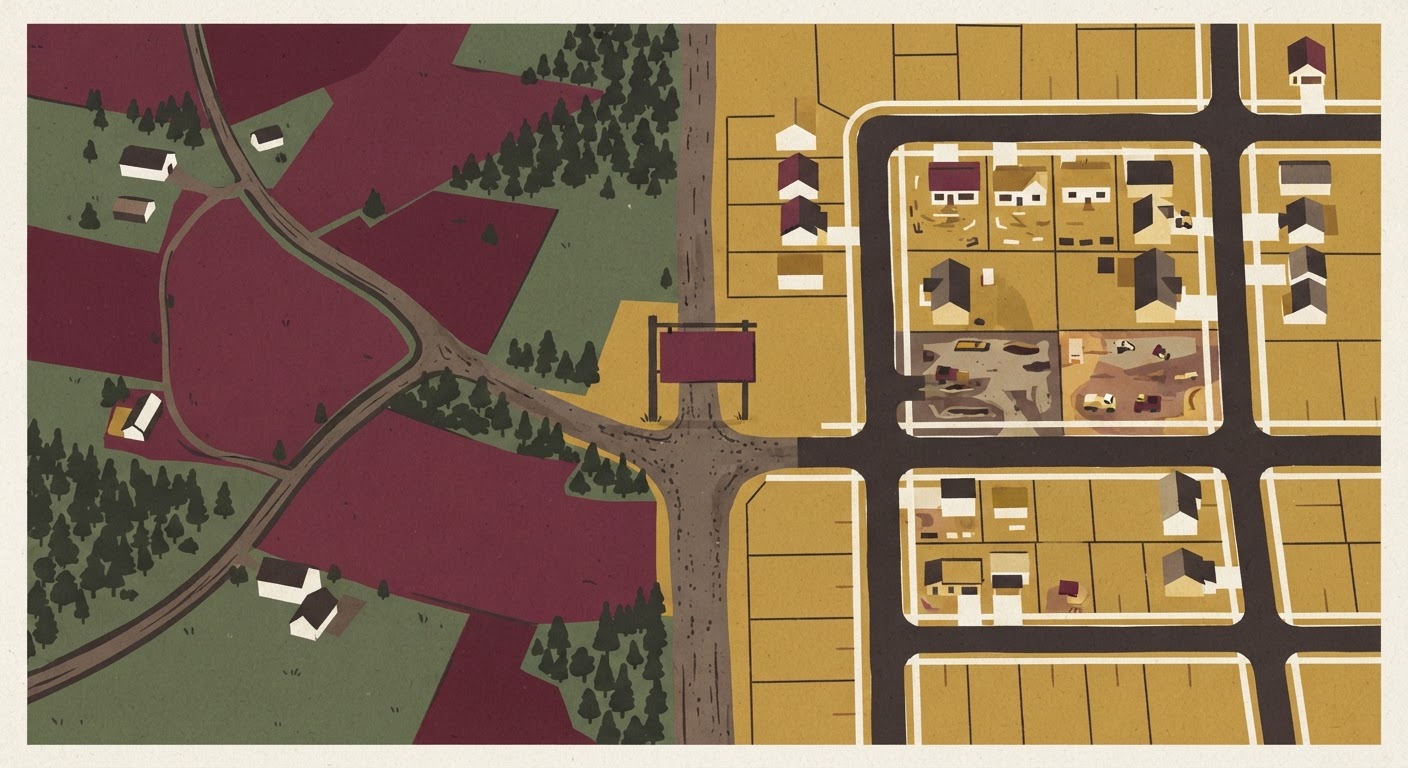
This is why a farm road that was comfortably “rural” for a decade can suddenly land in a gray zone. It’s not that your land changed. It’s that the lines drawn around it changed, usually because somewhere nearby added rooftops, a distribution center, or a highway interchange that pulled more people into commuting distance. If you’ve watched a subdivision go up on what used to be pasture outside your town, you’ve watched the eligibility math shift in real time, even if nobody told you.
USDA does try to soften the blow of these updates. The law has, at various points, allowed areas that would otherwise lose eligibility due to population growth to retain it for a period, precisely because lenders, sellers, and buyers need some stability to plan around. But those protections aren’t automatic or permanent, and they’ve changed over the years, so you can’t assume the same grace period that applied last time still applies now.
Checking Your Address Against the Current Map
Before you assume you’re in or out, check directly. USDA maintains an online eligibility tool where you can enter a specific address and get a real-time determination of whether that property sits in an eligible rural area. This is the only reliable way to know your status, because eligibility is determined address by address, not town by town. Two houses on opposite ends of the same county, or even the same road, can land on different sides of the line if that line runs through the middle of a redrawn census boundary.
A few practical notes on using the tool:
- Search the exact property address, not the nearest town center. Rural addresses with unusual formatting (route numbers, unnamed roads, PO box conventions) sometimes need to be entered carefully or looked up by parcel to get an accurate read.
- If the tool returns an ambiguous or unexpected result, don’t just trust your gut about what “should” be rural. Boundaries drawn from census data don’t always match local intuition about where town ends and country begins.
- Screenshot or save the determination with the date. If you’re mid-transaction and the map is scheduled to change, having a dated record of the property’s status at the time you checked can matter later.
- Check again closer to closing. Eligibility maps can update between when you start house hunting and when you’re ready to close, especially if you’re shopping during a known transition period.
Your lender’s loan officer should also be running this check, but it’s worth doing yourself, particularly if you’re looking at property near a town that’s been visibly growing. Don’t rely solely on what a real estate listing says about USDA eligibility. Listings are sometimes outdated by the time you see them.
Grandfathering and Pending Map Change Grace Periods
When USDA updates its maps following a new census or a scheduled review, it typically doesn’t flip the switch overnight for areas that are losing eligibility. There is usually a transition window built in, during which previously eligible areas that would be cut off due to population growth remain eligible, sometimes for a period tied to legislative action rather than a fixed calendar date. This exists specifically so that people who’ve been planning a purchase or refinance in a rural area don’t get blindsided by a boundary redraw they had no way to anticipate.
Because these grace periods and their lengths have been modified by different funding bills over time, the safest approach is to ask directly rather than rely on what you remember from a previous purchase or what a neighbor told you. Ask your lender specifically: “Is this property in an area with a pending eligibility change, and if so, what’s the current grace period status?” A lender who does USDA loans regularly should be able to answer this or find out quickly. You can also check USDA’s own rural development website for announcements about upcoming map revisions, since they typically publicize these changes before they take effect rather than implementing them silently.
If you’re buying in an area you suspect is on the bubble, timing matters. Getting your loan application in and moving before a scheduled change takes effect can sometimes preserve eligibility that would otherwise disappear. This is a case where dragging out a purchase decision can cost you access to a loan program, so it’s worth asking your lender early whether any clock is running.
Alternative Loan Programs If Your Area No Longer Qualifies
If your address has genuinely aged out of USDA eligibility with no grace period to fall back on, you still have options, though none replicate USDA’s specific advantages of no down payment and income-based structuring exactly.
- FHA loans. These allow low down payments and are available regardless of whether the area is classified as rural or urban. The tradeoff is mortgage insurance requirements that can add to your monthly cost compared to USDA’s guarantee fee structure.
- VA loans. If you or your spouse have qualifying military service, VA loans offer no down payment and no location-based eligibility restrictions at all. This is worth checking even if you’ve never used VA benefits before.
- Conventional loans with low down payment programs. Some conventional loan products offer reduced down payment requirements for qualifying buyers. These typically require better credit and involve private mortgage insurance until you build enough equity, but they don’t care what the census says about your address.
- State and local housing finance agency programs. Many states run their own first-time buyer or rural housing assistance programs with down payment help or below-market rates that don’t hinge on USDA’s specific map. Check with your state’s housing finance agency directly, since these programs and their terms vary widely and change often.
- Local and regional lenders, including farm credit institutions. Community banks and farm credit system lenders that know your area sometimes have portfolio loan products designed for exactly this situation, properties that don’t fit neatly into standard federal boxes. It’s worth a conversation even if their advertised programs don’t mention your situation by name.
If losing USDA eligibility affects your plans, it’s reasonable to feel frustrated that a census line drawn to reflect growth somewhere else changed what’s available to you. But the map redraw doesn’t erase your other options, it just means you’ll need to compare them with a clearer eye, ask each lender what their specific area and income restrictions actually are, and confirm current figures directly rather than assuming last year’s terms still apply.
