
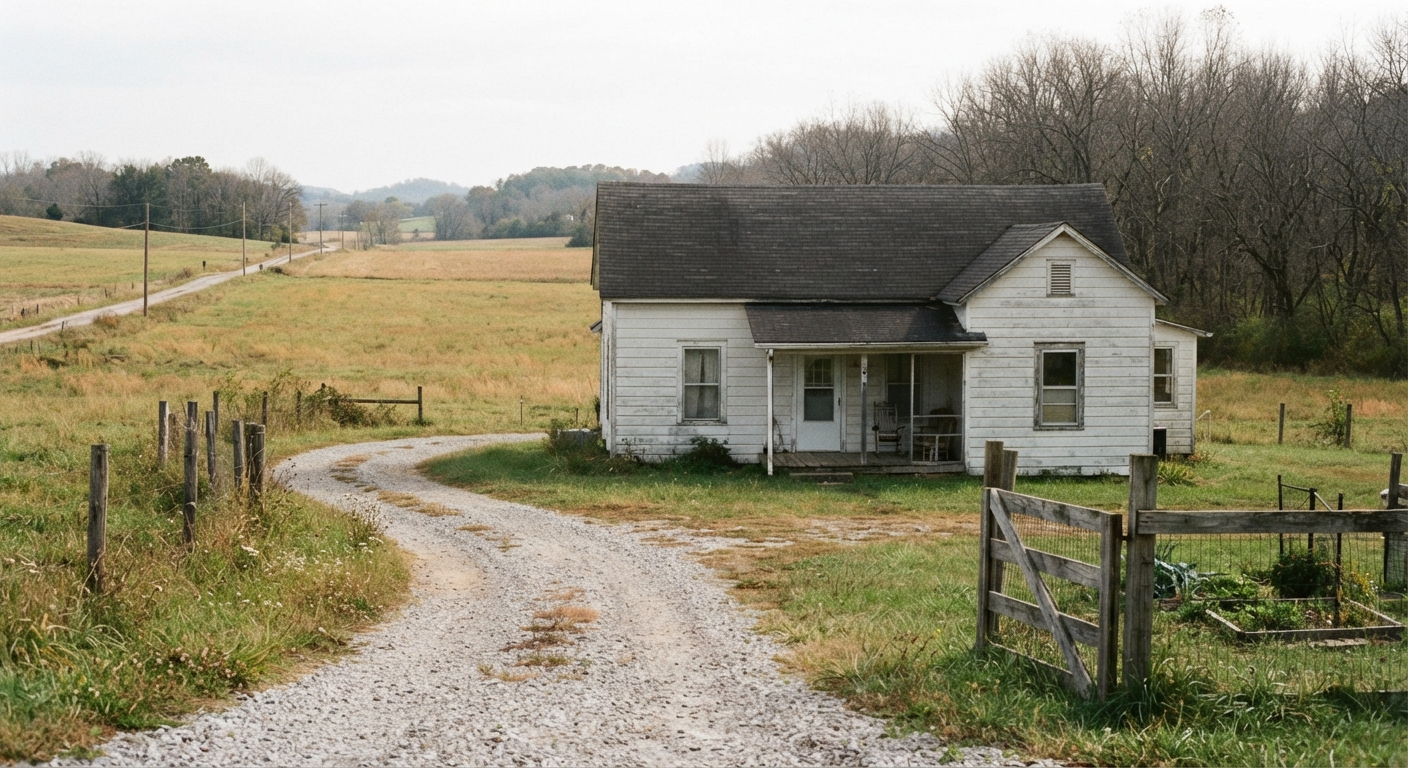
If you’ve ever tried to buy a home outside city limits and had a lender tell you the property “doesn’t qualify” or your income was “too low” for a conventional loan but somehow too high for assistance, you’ve probably run into the confusion around USDA loans. There are actually two different USDA home loan programs, and mixing them up is the number one reason people give up before they even apply. Let’s sort out what’s what.
Direct Loans vs. Guaranteed Loans: Not the Same Program
USDA Rural Development runs two home loan programs that share a name and a mission but work very differently.
The Guaranteed Loan program works like most mortgages you’re familiar with. You go to a participating bank, credit union, or mortgage company, they underwrite the loan using their own process, and USDA backs a portion of it so the lender takes on less risk. You’ll deal with a private loan officer from start to finish, and the income limits are relatively generous, covering a good chunk of moderate-income rural households.
The Direct Loan program, which is what this article covers, is different. USDA itself is the lender. There’s no bank in the middle. You apply through your local USDA Rural Development office, and USDA services the loan directly, often with a subsidized interest rate that can adjust based on your income through something called payment assistance. This program is aimed specifically at low- and very-low-income households who might not qualify for financing anywhere else, including through the guaranteed program.
The tradeoff is that Direct Loans come with more paperwork, longer processing times, and stricter eligibility rules. If your income is solidly moderate for your area, you’ll likely be routed toward a guaranteed loan through a private lender. If your income is on the lower end, and especially if you’ve been turned down elsewhere, the Direct Loan program is worth serious attention because it’s built for exactly your situation.
Income Limits: How They’re Actually Calculated
This is where a lot of people get tripped up, because USDA income limits aren’t one flat number. They’re set by county (sometimes by metro area, but most of rural America is county-based), and they scale with household size. A limit that applies to a household of four is not the same limit that applies to a single retiree or a couple.
A few things to understand about how this works in practice:
- Limits vary by geography. A county with a higher cost of living will have a higher income ceiling than a county where housing costs are lower. Two counties right next to each other can have different limits.
- Limits vary by household size. USDA generally uses tiers, with larger households allowed higher income because more people are being supported on that money. A household of five to eight typically has a higher limit than a household of one to four.
- “Income” means more than your paycheck. USDA counts income from every adult household member, not just whoever is on the loan. This includes wages, self-employment or farm income, Social Security, pensions, and in some cases regular support payments. If you’ve got a grown kid or an elderly parent living with you, their income likely gets counted too, even if they’re not on the loan application.
- Deductions can bring your number down. USDA allows certain deductions before comparing your income to the limit, such as amounts for dependents, childcare costs, and in some cases medical expenses for elderly or disabled household members. This is why two households with the same gross income can have very different eligibility outcomes.
Because these figures are updated periodically and differ county by county, don’t rely on a number you heard from a neighbor or saw in an old forum post. The USDA Rural Development website has an income eligibility tool where you plug in your state and county and household size and get the current limit for your exact situation. Check it fresh before you assume you’re in or out.
Property Eligibility: It’s Not Just “Rural” in the Way You’d Guess
The property itself has to sit inside a USDA-eligible rural area, and this is where things get counterintuitive. “Rural” for USDA purposes is a mapped designation, not a general vibe. There are plenty of small towns and even some outer suburbs of larger cities that qualify, and there are some places you’d swear are rural that have been reclassified out of eligibility as population grows.
Here’s what matters about the maps:
- The maps are based on population data and get reviewed periodically, tied largely to census updates. When an area grows past a certain population threshold, it can lose eligibility. This has been a real headache for fast-growing exurban areas near mid-size cities.
- Eligibility is checked at the time of application, using the current map, not whatever map existed when you started looking at houses. If you’ve had your eye on a property for a while, it’s worth re-checking eligibility before you get too far into the process, especially if the area has seen new development or subdivisions.
- USDA provides an online property eligibility map where you can enter a specific address and get an immediate eligible/not-eligible answer, along with income limit information for that location. This is the single most useful tool for figuring out if a specific house is even in play before you invest time in the rest of the process.
- The property must be your primary residence, modest in size and cost for the area, and generally can’t include income-producing land or buildings, which matters for anyone hoping to buy acreage with a working barn, rental unit, or commercial structure attached. A small garden or hobby livestock setup is typically fine; a working farm operation attached to the house usually is not what this program is designed to finance.
The Application Process, Step by Step
Unlike a conventional mortgage, you don’t shop this loan around to multiple lenders. There’s one door: your local USDA Rural Development office. Here’s roughly how it goes.
- Find your local office. USDA Rural Development has offices organized by state and often by service area covering multiple counties. Start at the Rural Development website and use their office locator, or call your state office if you’re not sure which local office covers your county.
- Get a preliminary eligibility check. Before you fill out formal paperwork, run your household income and target property address through USDA’s online eligibility tools. This saves everyone time and tells you whether it’s worth moving forward.
- Gather your documentation. Expect to provide income verification for every adult in the household, tax documents, bank statements, and information on debts. Self-employed and farm households should be ready for a bit more back-and-forth here since income can be less straightforward to document than a standard paycheck.
- Submit your application to the local office. A USDA staff member will review your file, verify income against the current limits for your county and household size, and determine your eligibility and loan amount.
- Property is appraised and reviewed. Once you have a specific property under consideration, USDA will need it appraised and will verify it meets both the location eligibility and the condition standards required for financing.
- Loan approval and closing. Because USDA is the lender, closing is coordinated through the Rural Development office rather than a bank’s mortgage department. Processing times can run longer than a conventional loan, particularly during periods of high demand or when program funding cycles affect how quickly applications move, so build in patience and ask your local office for a realistic timeline up front.
The Direct Loan program isn’t fast and it isn’t flashy, but for households that have been priced out or turned down elsewhere, it’s one of the few paths to homeownership built specifically with rural, lower-income buyers in mind. Start with the eligibility tools, talk to your local office early, and don’t be afraid to ask questions twice if the first answer didn’t quite make sense. That’s what they’re there for.
