
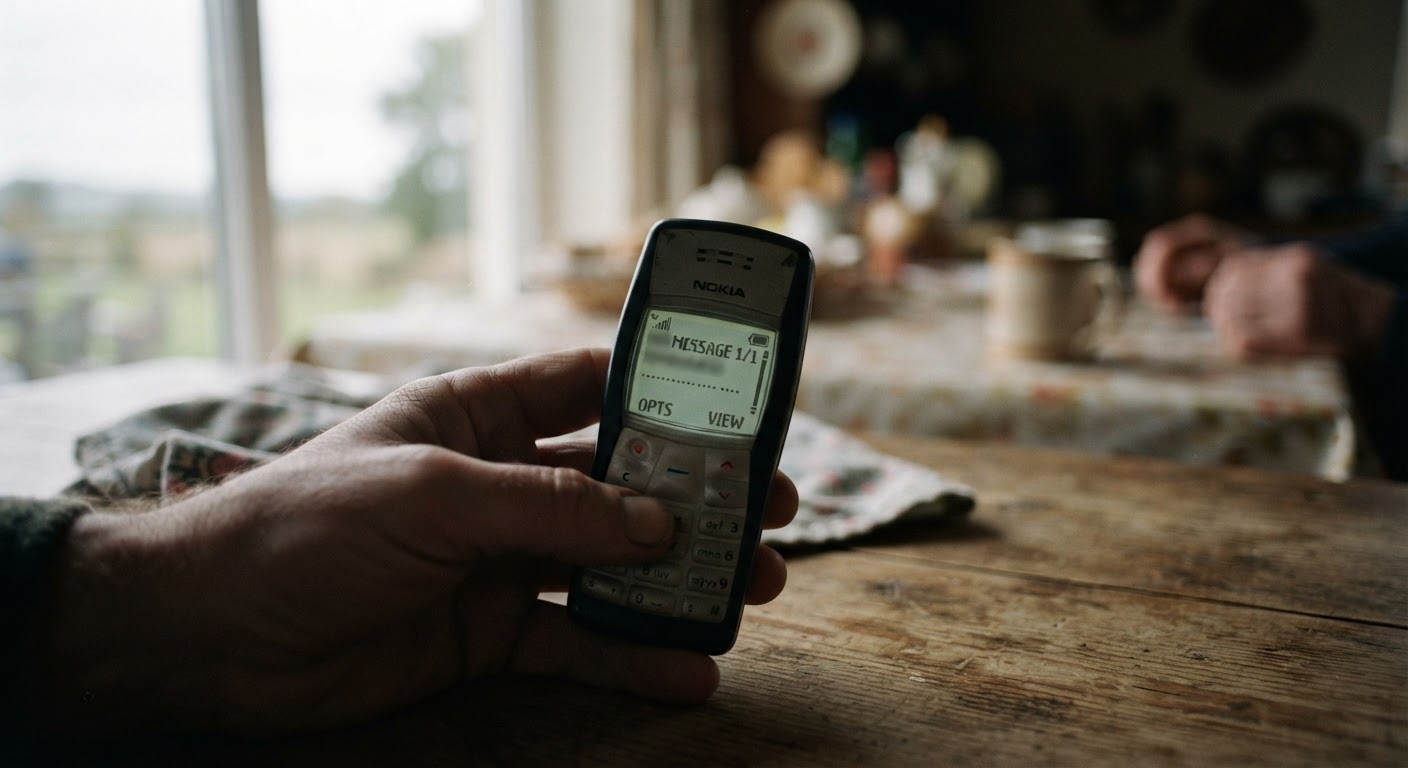
If you’ve ever driven back from the co-op or the far pasture only to find three fraud alerts and a low-balance warning that all landed at once—hours after they were sent—you already know the problem. It’s not that your bank didn’t try to reach you. It’s that the notification system they built assumes you’re sitting in a city with full bars and a phone that’s always talking to a tower. Out here, that assumption falls apart daily.
Why push notifications fail first when signal drops
Most banking apps default to push notifications, which are small data packets sent over an internet connection—Wi-Fi or cellular data. Push notifications are convenient because they’re free to send and show up instantly when everything’s working. The trouble is they need a live, stable data connection to arrive, and they’re often the first thing to drop when signal gets thin. Unlike a phone call or a text, a push notification that can’t be delivered right away doesn’t necessarily queue up and wait patiently for you to get signal back. Depending on the app and your phone’s settings, it can time out, get skipped, or arrive so late it’s useless.
SMS text messages work differently. They ride on the same cellular network used for voice calls, which typically reaches farther and holds a connection more reliably than mobile data, especially at the edges of coverage. Text messages also have a longer delivery window—your carrier will usually keep trying to deliver a text for a while after it’s sent, whereas a push notification often just fails silently if your phone can’t reach the app’s servers in that first attempt.
This matters most for the alerts you can’t afford to miss: unusual card activity, a login from an unrecognized device, or your balance dropping below what you need to cover an autopay. If those come through as push notifications only, you’re relying on the weakest link in the chain during the exact moments—driving through the hills, working in a machine shed with metal siding, being out on the water or in the back forty—when your signal is least dependable.
Switching critical alerts to SMS instead of app notifications
Nearly every bank and credit union that offers a mobile app also offers a separate alerts menu, often buried under settings, security, or notifications preferences. This is usually where you’ll find the option to choose delivery method for each alert type: push, SMS, email, or some combination. Don’t assume your bank has this set up the way you’d want by default—most systems default to push because it’s cheaper for the bank to send.
Go through this checklist next time you’re near reliable Wi-Fi:
- Log into your bank’s website or app and find the alerts or notifications settings, not just the app’s phone-level notification permissions.
- For fraud alerts, unusual login alerts, and large or unusual transaction alerts, switch delivery to SMS if that option exists. Some banks let you select multiple channels for the same alert—choose SMS and email together for redundancy.
- Confirm your phone number on file is current and that it’s the number on the phone you actually carry, not a landline or an old number from a family plan.
- Ask your bank directly, either in the app’s settings or by calling, whether SMS alerts are sent through a standard text message or through an in-app messaging system that still requires data. Some institutions label something “text alert” when it’s really a data-dependent message styled to look like a text. If you’re not sure, ask a teller or call the number on the back of your card and have them walk you through it.
Email can be a useful backup layer, but treat it as a second line of defense rather than your primary one. Email delivery depends on data service just like push notifications do, and most people don’t check email as compulsively as they glance at a text. Still, having both SMS and email active means an alert has two chances to reach you instead of one.
Setting alert thresholds that account for delayed delivery
Even with SMS as your primary channel, you should assume every alert might arrive later than the moment it was triggered. That means the thresholds you set—the dollar amounts or conditions that trigger a low-balance or large-transaction alert—need some cushion built in.
If your bank lets you customize a low-balance alert, set it well above your actual minimum, not right at the edge. If you genuinely need at least a set amount to stay in your account to avoid an overdraft, set the alert threshold noticeably higher than that number. Think of the gap as your buffer for delayed delivery: the time between when your balance actually crosses the line and when you might realistically see the message on your phone. In areas with spotty coverage, that gap could be hours, not minutes.
Do the same with large-transaction alerts. If you set the threshold too high hoping to reduce noise, you may miss smaller fraudulent charges—a common tactic is to test a stolen card with a small purchase before making a bigger one. If you set it too low, you’ll get so many alerts that you start ignoring them. Ask your bank whether the threshold can be adjusted, and revisit it a couple of times a year, especially around seasons when your spending pattern changes, like planting, harvest, or holiday travel.
It also helps to check whether your bank offers a daily balance summary as a standing alert rather than only threshold-triggered messages. A scheduled daily text, sent at a set time regardless of your balance, doesn’t depend on a triggering event and gives you one more predictable touchpoint even if something else fails to send.
Backup habits for checking accounts when alerts don’t arrive
No alert system is foolproof, especially when you’re working somewhere signal simply doesn’t reach. Building a few manual habits into your routine gives you a backstop.
- Pick a regular check-in time, such as every time you fuel up or once you’re back in town, to open your banking app or call the automated phone banking line and glance at recent activity and current balance.
- Save your bank’s automated phone banking number in your contacts. These lines often work over a basic voice call and can read back your balance and recent transactions even when data service is unusable.
- If your bank offers a printed or emailed statement summary, don’t ignore it just because it feels old-fashioned. A monthly paper trail is a useful cross-check against what your phone did or didn’t tell you in real time.
- Let a trusted family member or business partner know your alert setup, especially if you’re the one who’s frequently out of range. A second set of eyes on a shared account can catch something you missed while you were out of signal.
None of this makes your connectivity problem disappear, but it shifts the risk. Instead of depending entirely on a notification system built for city coverage maps, you end up with layered backups—text, email, scheduled summaries, and manual checks—so that a gap in cell service is an inconvenience rather than the reason you didn’t catch a problem until it was too late.
