
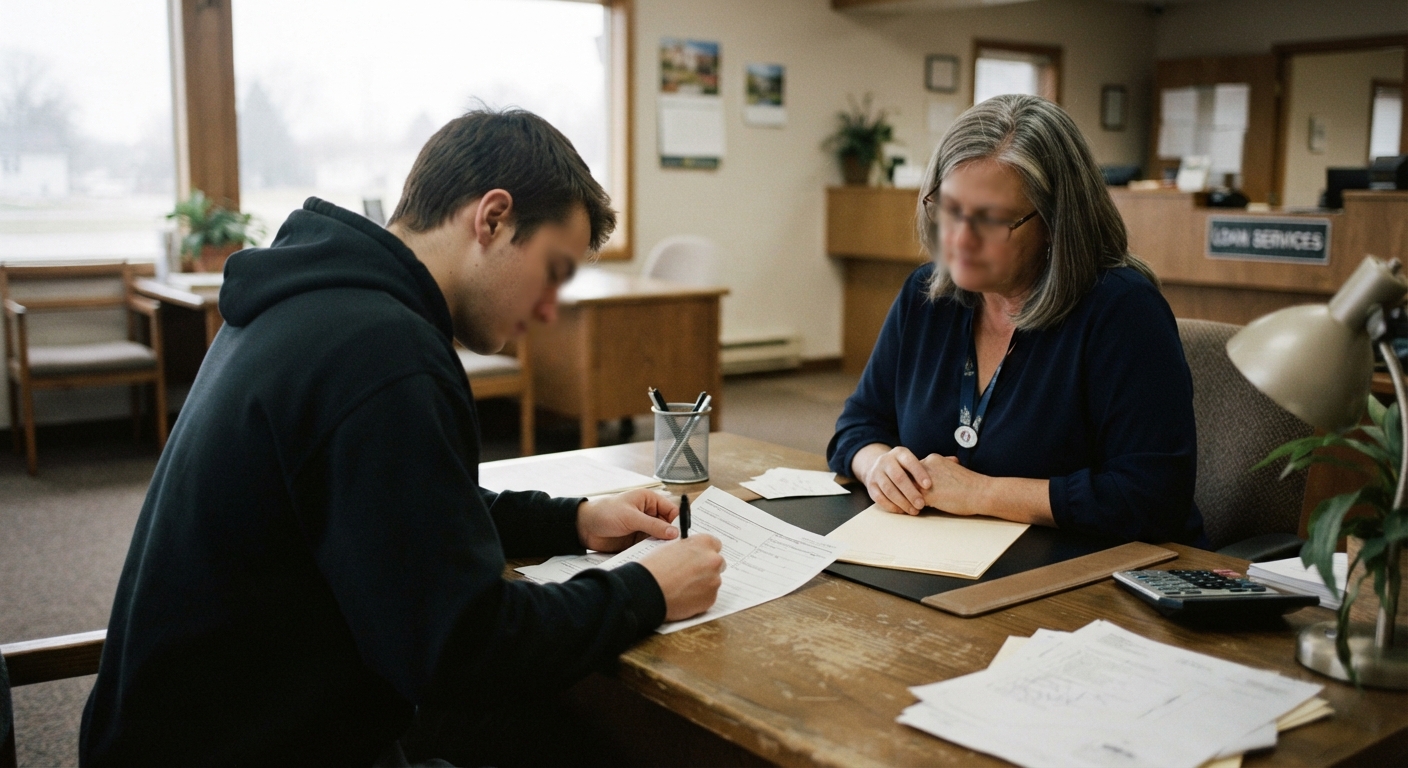
If you grew up in a town where the bank branch closed a few years back, or where the nearest credit union lobby is open Tuesday and Thursday mornings only, “just get a starter credit card” is not simple advice. It’s advice built for someone who can walk into three different bank branches on their lunch break and compare offers. Out here, that’s not how it works. Your options might be one small bank, one credit union with limited hours, and whatever shows up in your mailbox or social media feed promising instant approval. Some of those mailers and pop-up ads are fine. A lot of them are aimed squarely at people who don’t have a loan officer they can just call up and ask “is this legit?” So before we get into the how, understand this: building credit from zero in a small town takes more patience and more legwork than it does in a city, but it’s absolutely doable, and the habits you build doing it the hard way tend to stick better anyway.
Youth savings accounts and secured share certificates as a first step
Before you ever apply for anything with the word “credit” in the name, you need a relationship with a financial institution. That sounds obvious, but in a lot of rural counties, plenty of teens and young adults have never had an account of their own — maybe they’re on a parent’s account, or they’ve never had one at all because the nearest branch felt like too much hassle to bother with. Start there. A youth savings account at a local credit union, even one with odd hours, gets you in the system and gets a real human being to recognize your name when you walk in.
From that base, look at secured share certificates, sometimes called secured certificate loans, which a lot of small credit unions offer even if they don’t advertise them loudly. Here’s the basic idea: you put money into a certificate (similar to a CD), and the credit union lends against it, reporting your payments to the credit bureaus. You’re borrowing against your own money, so the risk to the credit union is low, which means they’re often willing to do this for someone with zero credit history. It won’t feel exciting. You’re not getting a new phone or truck out of it. But it’s one of the most reliable low-risk ways to start building a payment history when you don’t have any track record at all, and it doesn’t require a big-city bank’s underwriting model that may not even have a category for “first-time rural borrower with irregular seasonal income.”
How a parent or grandparent can co-sign responsibly
In small towns, family co-signing is often the fastest path to a first credit card or loan, because the local lender knows the family and trusts the relationship. That trust is valuable, but it can also lead to co-signing arrangements that put more risk on mom, dad, or grandpa than anyone really talks through up front.
If you’re the parent or grandparent being asked to co-sign, a few things are worth saying out loud before you sign anything. First, understand that co-signing means you’re on the hook for the full balance if the young adult doesn’t pay — not just morally, but legally. Second, ask the lender directly whether the account will report to all three credit bureaus under the young adult’s name as well as yours; some smaller lenders only report to one or two bureaus, which limits how much good the account does. Third, set a plan for when your name comes off. A co-signed card or loan isn’t meant to be permanent. A reasonable goal is six to twelve months of on-time payments before asking the lender about removing the co-signer, and many small banks will do this without much fuss if the payment history is clean.
And if you’re the young adult, do your parent or grandparent the courtesy of treating that co-signed account like it’s the most important bill you have, because in a lot of ways it is. A missed payment doesn’t just hurt your credit. It shows up on theirs too, and it can strain a relationship that matters a lot more than any credit score.
Credit-builder loans at small banks and credit unions
Credit-builder loans work differently than a regular loan. Instead of getting a lump sum of cash up front, the amount you “borrow” gets held in a locked savings account while you make fixed payments over a set term. Once you’ve paid it off, you get access to the money, and in the meantime, your payments get reported to the credit bureaus. It’s a strange-feeling product the first time you hear about it — you’re paying to save, essentially — but it’s specifically designed for people with no credit history, which describes a lot of rural young adults whose first real financial move happens well after high school because there was no local program pushing them toward one earlier.
Big banks mostly don’t bother with these products because the dollar amounts are small and the profit margin is thin. Small community banks and credit unions offer them because building a relationship with a young local customer now often means keeping that customer’s checking account, auto loan, and eventually mortgage business for decades. Ask your local credit union directly if they have one; it’s often not advertised on the website, but a loan officer will know.
A first vehicle or equipment loan as a legitimate credit-building tool
In a lot of rural areas, the first real loan someone takes out isn’t a credit card at all — it’s for a used truck, a tractor attachment, or a piece of equipment needed for a trade. That’s not a consolation prize compared to a “real” credit-building strategy. A small, manageable vehicle or equipment loan through a local bank or credit union, paid on time, builds credit just as effectively as a credit card does, and sometimes more effectively because installment loans (fixed payment, fixed term) demonstrate a different kind of reliability to lenders than revolving credit does.
The key word here is manageable. Financing more truck than you need because the dealer’s finance office made it easy isn’t credit building, it’s a setup for stress. Talk to your local bank about a pre-approval before you go shopping, so you know your number walking in, and consider whether a smaller, older, paid-down loan serves your credit and your budget better than a bigger one with a longer term.
Avoiding predatory “credit repair” offers
If you’ve got thin or no credit and you live somewhere without a lot of banking options nearby, you are exactly the target market for credit repair companies, rent-to-own credit card offers, and “guaranteed approval” loans that show up in mailers and online ads. These outfits know that someone without an easy branch to walk into is more likely to trust an 800 number or a slick website because there’s no one down the street to ask for a second opinion.
A few warning signs are worth remembering: any company that asks for payment before doing anything, any offer that guarantees a specific credit score increase, and any lender that doesn’t ask a single question about your income or ability to repay. Legitimate credit-builder products, whether from a credit union or a small bank, will always involve some kind of underwriting and will never promise a guaranteed outcome. When in doubt, call your local credit union — even if it’s only open two mornings a week — and ask them straight out whether an offer you received in the mail looks legitimate. That’s a service a real institution will give you for free, and it’s one of the genuine advantages of banking somewhere small: someone will actually pick up the phone and give you a straight answer.
