
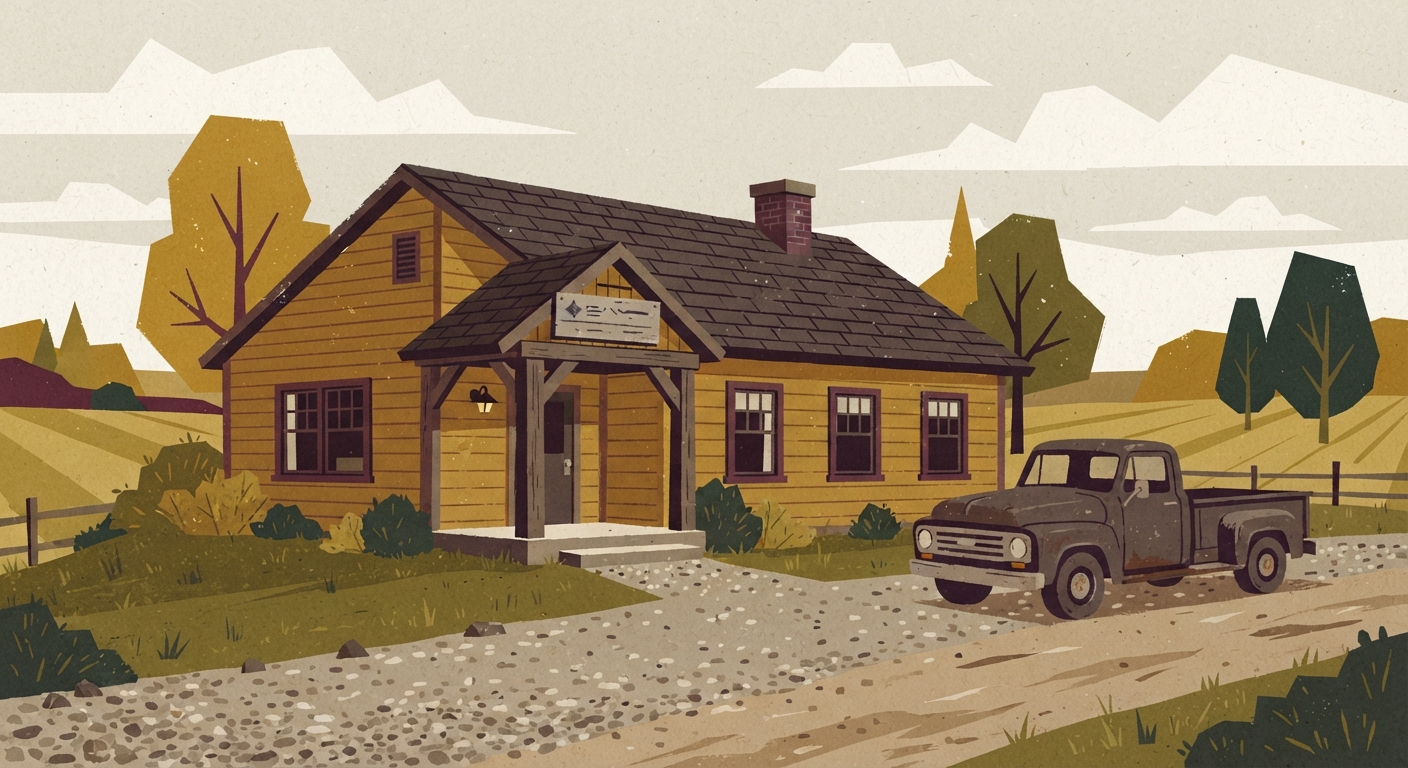
Chances are you’ve driven past a Farm Credit office a hundred times. Maybe it’s a low brick building on the edge of town, sandwiched between the co-op and the implement dealer, with a name like “First Farm Credit” or “AgriBank Association” on the sign. You’ve probably never walked in because you already bank somewhere else, or because you assumed it was only for people running a few thousand acres. That assumption is worth revisiting.
What the Farm Credit System Actually Is
The Farm Credit System isn’t a bank chain and it isn’t a government agency, even though it sounds like it could be either. It’s a nationwide network of borrower-owned cooperative lenders, chartered by Congress over a century ago to make sure farmers and rural communities had reliable access to credit even when regular banks pulled back from agriculture. Instead of one big company, the System is made up of dozens of independent associations, each one covering its own territory, each one owned by the very people who borrow from it.
That last part is the piece most people miss. When you take out a loan from a Farm Credit association, you’re not just a customer. You typically become a part owner of that association, alongside every other farmer, rancher, or rural landowner who borrows there. It’s a cooperative structure, similar in spirit to how your local electric co-op or farm supply co-op works, except the product is credit instead of electricity or seed.
How It Differs from a Community Bank or Credit Union
A community bank answers to shareholders, and a credit union answers to depositor-members. Farm Credit associations answer to borrower-members, and only borrower-members. You don’t join by opening a savings account. You join by taking out a loan, and your ownership stake is generally tied to how much you borrow.
That structure changes the whole relationship. Because there are no outside shareholders demanding a return, and because the entire loan portfolio is either agricultural or rural in nature, Farm Credit associations can afford to underwrite in ways a general-purpose lender often can’t or won’t. A community bank loan officer might see three years of uneven income on a cattle operation and get nervous. A Farm Credit underwriter has likely seen that exact pattern hundreds of times and knows what normal looks like for that kind of operation.
There’s also the patronage piece, which we’ll get to below, and which has no real equivalent at a typical bank. Credit unions return value to members too, sometimes through lower rates or dividends on deposits, but Farm Credit’s version is tied specifically to the loan itself, not to a savings relationship.
What Farm Credit Associations Actually Lend On
The core business is land. Farm Credit associations are often the most competitive option in the region for financing the purchase of farmland or ranch land, and many will go out to longer terms than a community bank is comfortable holding on its own books. Beyond land, the lending menu usually includes:
Equipment loans for tractors, combines, irrigation systems, and other big-ticket machinery. Operating lines of credit that carry a farm or ranch through the season between planting and harvest, or between calving and sale weight. Facility loans for barns, grain storage, and other ag structures. Home loans for rural residences, including houses on acreage that a typical mortgage lender might flag as “too rural” or “too much land” to finance easily.
Many associations also run young, beginning, and small farmer programs, sometimes with more flexible down payment requirements or dedicated staff who work specifically with people trying to get started without inherited land or existing collateral. If you’re trying to buy your first forty acres or scale up from a side operation into something full-time, this is worth asking about directly, because these programs aren’t always advertised loudly.
How Loan Officers Evaluate Applicants Differently
This is where the ag-specific structure really shows up in practice. A loan officer at a Farm Credit association typically has a background in agriculture or ag finance specifically, not general consumer or commercial lending. That means they’re reading your operation with context.
They know that a cow-calf operation’s income arrives once or twice a year, not monthly, and they build repayment schedules around that instead of expecting even payments the way a typical installment loan does. They understand that a grain farmer’s balance sheet can look very different in a drought year versus a good one, and they know how to weigh a few rough years against your longer trend rather than reacting to the most recent bad season. They’re familiar with crop rotations, so if your acres show alternating corn and soybeans, or a hay-and-pasture rotation with cattle, that’s read as normal management rather than an inconsistency to question.
This doesn’t mean Farm Credit approves loans a bank would decline out of some blanket generosity. It means the underwriting criteria are built around agricultural cash flow patterns from the start, so you’re less likely to get tripped up by a model that was really designed for evaluating a retail shop or a salaried household.
Patronage Dividends Explained
Here’s the part that surprises first-time Farm Credit borrowers the most: many associations pay patronage. That means that after the association covers its costs and sets aside what it needs for reserves, a portion of the earnings gets distributed back to borrower-members, often as a mix of cash and stock, roughly in proportion to how much business you did with them.
Put simply, some of the interest you pay over the year can come back to you afterward as a check. It’s not guaranteed every year, and the amount depends on how the association performed and how its board decides to allocate earnings, but it’s a real feature of the cooperative model, not a marketing gimmick. Over time, patronage can meaningfully lower your effective borrowing cost compared to the stated interest rate on paper. When you’re comparing a Farm Credit loan quote to a bank quote, it’s worth asking directly whether and how patronage has been paid historically at that association, since past distributions aren’t a promise but they do tell you something about how the cooperative treats its members.
Questions to Ask Before Choosing Farm Credit Over Your Local Bank or Credit Union
Start with the basics: what’s the rate structure, fixed or variable, and how does it compare to what your local bank or credit union is quoting for the same loan type? Ask how patronage has been distributed over the last several years, and whether it’s paid in cash, stock, or both. Ask what the membership stock requirement is and what happens to that stock if you pay off the loan early or sell the land.
Ask about prepayment penalties, since some ag land loans carry them and some don’t. Ask how the loan officer would structure your specific repayment schedule around your actual income timing, whether that’s calf sales, harvest, or off-farm wages supplementing the operation. And ask your existing bank or credit union the same questions side by side, because sometimes your local institution can match the flexibility, and sometimes it genuinely can’t, since it isn’t built around agricultural cash flow the way a Farm Credit association is.
Where to Find Your Regional Association and How Membership Works
Farm Credit associations are organized regionally, so the one serving your county has a specific name and territory rather than being a single national brand you’d search for directly. The easiest starting point is the office you’ve already seen driving through town, or a quick search for “Farm Credit” plus your state or region. Membership begins when you apply for and receive a loan; there’s no separate membership fee or account to open beforehand. Once you’re a borrower, you’re a member with voting rights in the cooperative, and you’ll typically get notices about annual meetings and financial results, the same way you would from any co-op you belong to.
